The First Passover
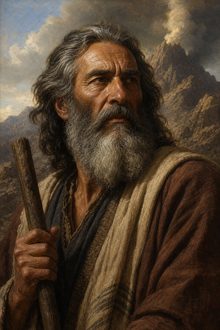
Before the last plague the Israelites are given instructions that are as much liturgy as escape plan. Each household is to take a year-old lamb without defect, kill it at twilight, and put its blood on the doorframes. The meat is roasted and eaten with bitter herbs and unleavened bread, and eaten in haste — cloak tucked in, sandals on, staff in hand.
The blood is a sign, and the destroyer passes over the marked houses. The month is reset to be the first of the year, and the meal is commanded as a permanent observance with an instruction built in for the future: when your children ask what this means, you tell them.
Passover became the defining annual retelling of the Exodus, and the setting of Jesus' last supper with his disciples; Paul draws the connection directly in writing to Corinth.
Where in scripture
[1] Yahweh spoke to Moses and Aaron in the land of Egypt, saying, [2] “This month shall be to you the beginning of months. It shall be the first month of the year to you. [3] Speak to all the congregation of Israel, saying, ‘On the tenth day of this month, they shall take to them every man a lamb, according to their fathers’ houses, a lamb for a household; [4] and if the household is too little for a lamb, then he and his neighbor next to his house shall take one according to the number of the souls; according to what everyone can eat you shall make your count for the lamb. [5] Your lamb shall be without defect, a male a year old. You shall take it from the sheep, or from the goats: …
Exodus 12:1–28 — opening verses
[4] “‘These are the set feasts of Yahweh, even holy convocations, which you shall proclaim in their appointed season. [5] In the first month, on the fourteenth day of the month in the evening, is Yahweh’s Passover. [6] On the fifteenth day of the same month is the feast of unleavened bread to Yahweh. Seven days you shall eat unleavened bread. [7] In the first day you shall have a holy convocation. You shall do no regular work. [8] But you shall offer an offering made by fire to Yahweh seven days. In the seventh day is a holy convocation: you shall do no regular work.’”
Leviticus 23:4–8
[7] Purge out the old yeast, that you may be a new lump, even as you are unleavened. For indeed Christ, our Passover, has been sacrificed in our place. [8] Therefore let us keep the feast, not with old yeast, neither with the yeast of malice and wickedness, but with the unleavened bread of sincerity and truth.
1 Corinthians 5:7–8
Scripture quotations are from the World English Bible, a public-domain translation.