The Garden of Eden and the Fall
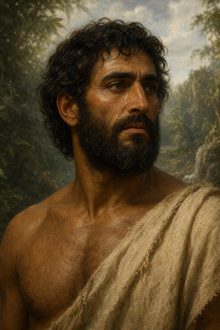
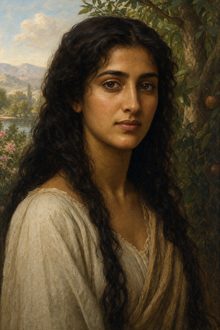
The second creation account narrows from the cosmos to a garden. Adam is formed from the dust and settled in Eden to work it and keep it; Eve is made as his counterpart. Everything in the garden is permitted except the fruit of one tree.
The serpent's approach is not force but suggestion — a question about what God really said, then a flat contradiction of the consequence. Both eat. What follows is immediate and domestic before it is cosmic: they notice their nakedness, they hide, and when God questions them the man blames the woman and the woman blames the serpent. The judgments touch the ordinary business of living — childbirth, work, the ground itself — and the pair are sent out of the garden, the way back guarded.
The episode became the Bible's account of how a good creation came to contain death and estrangement, and Paul later reads it as the counterpart to what Christ undoes.
Where in scripture
[4] This is the history of the generations of the heavens and of the earth when they were created, in the day that Yahweh God made the earth and the heavens. [5] No plant of the field was yet in the earth, and no herb of the field had yet sprung up; for Yahweh God had not caused it to rain on the earth. There was not a man to till the ground, [6] but a mist went up from the earth, and watered the whole surface of the ground. [7] Yahweh God formed man from the dust of the ground, and breathed into his nostrils the breath of life; and man became a living soul. [8] Yahweh God planted a garden eastward, in Eden, and there he put the man whom he had formed. …
Genesis 2:4–25 — opening verses
[1] Now the serpent was more subtle than any animal of the field which Yahweh God had made. He said to the woman, “Has God really said, ‘You shall not eat of any tree of the garden?’” [2] The woman said to the serpent, “We may eat fruit from the trees of the garden, [3] but not the fruit of the tree which is in the middle of the garden. God has said, ‘You shall not eat of it. You shall not touch it, lest you die.’” [4] The serpent said to the woman, “You won’t really die, [5] for God knows that in the day you eat it, your eyes will be opened, and you will be like God, knowing good and evil.” …
Genesis 3:1–24 — opening verses
[12] Therefore as sin entered into the world through one man, and death through sin; and so death passed to all men, because all sinned. [13] For until the law, sin was in the world; but sin is not charged when there is no law. [14] Nevertheless death reigned from Adam until Moses, even over those whose sins weren’t like Adam’s disobedience, who is a foreshadowing of him who was to come. [15] But the free gift isn’t like the trespass. For if by the trespass of the one the many died, much more did the grace of God, and the gift by the grace of the one man, Jesus Christ, abound to the many. [16] The gift is not as through one who sinned: for the judgment came by one to condemnation, but the free gift came of many trespasses to justification. …
Romans 5:12–19 — opening verses
Scripture quotations are from the World English Bible, a public-domain translation.