God's Covenant with Abraham
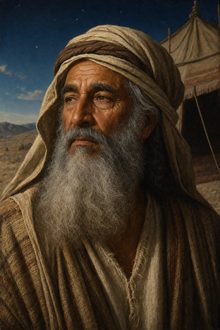
Abraham has left Haran on a promise but has no land and no child, and he says so. God takes him outside to count the stars, tells him his descendants will be as many, and Abraham believes — a moment Paul would later make the foundation of his argument that righteousness comes by faith rather than law.
The covenant is then sealed by a ritual whose strangeness is the point: animals cut in half, and a smoking firepot and flaming torch passing between the pieces while Abraham sleeps. In the customs of the ancient Near East the parties to such an oath walked between the pieces themselves, invoking the same fate if they broke it. Here only God passes through.
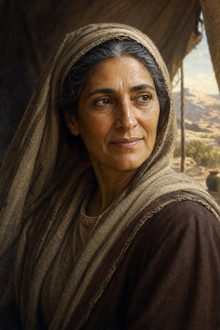
A second encounter adds circumcision as the covenant's sign, changes Abram's name to Abraham and Sarai's to Sarah, and names the promised son.
Where in scripture
[1] After these things Yahweh’s word came to Abram in a vision, saying, “Don’t be afraid, Abram. I am your shield, your exceedingly great reward.” [2] Abram said, “Lord Yahweh, what will you give me, since I go childless, and he who will inherit my estate is Eliezer of Damascus?” [3] Abram said, “Behold, to me you have given no children: and, behold, one born in my house is my heir.” [4] Behold, Yahweh’s word came to him, saying, “This man will not be your heir, but he who will come out of your own body will be your heir.” [5] Yahweh brought him outside, and said, “Look now toward the sky, and count the stars, if you are able to count them.” He said to Abram, “So will your offspring be.” [6] He believed in Yahweh, who credited it to him for righteousness. …
Genesis 15:1–21 — opening verses
[1] When Abram was ninety-nine years old, Yahweh appeared to Abram and said to him, “I am God Almighty. Walk before me, and be blameless. [2] I will make my covenant between me and you, and will multiply you exceedingly.” [3] Abram fell on his face. God talked with him, saying, [4] “As for me, behold, my covenant is with you. You will be the father of a multitude of nations. [5] Your name will no more be called Abram, but your name will be Abraham; for I have made you the father of a multitude of nations. [6] I will make you exceedingly fruitful, and I will make nations of you. Kings will come out of you. …
Genesis 17:1–27 — opening verses
[1] What then will we say that Abraham, our forefather, has found according to the flesh? [2] For if Abraham was justified by works, he has something to boast about, but not toward God. [3] For what does the Scripture say? “Abraham believed God, and it was accounted to him for righteousness.” [4] Now to him who works, the reward is not counted as grace, but as something owed. [5] But to him who doesn’t work, but believes in him who justifies the ungodly, his faith is accounted for righteousness. [6] Even as David also pronounces blessing on the man to whom God counts righteousness apart from works, [7] “Blessed are they whose iniquities are forgiven, whose sins are covered. [8] Blessed is the man whom the Lord will by no means charge with sin.” …
Romans 4:1–25 — opening verses
Scripture quotations are from the World English Bible, a public-domain translation.