The Birth of Moses
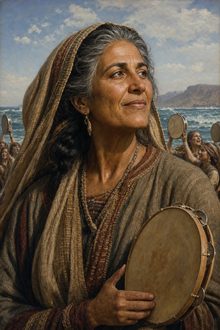
A new king who did not know Joseph sets the Israelites to forced labour, and when they keep increasing he orders every Hebrew boy thrown into the Nile. The order is first resisted by two midwives, Shiphrah and Puah, who are named where the Pharaoh is not — they simply do not do it, and tell him the Hebrew women give birth too quickly.
A Levite woman hides her son for three months, then waterproofs a papyrus basket and sets him among the reeds at the river's edge, his sister watching. Pharaoh's daughter finds him, recognises him as a Hebrew child, and keeps him; the sister steps forward and fetches a nurse — the baby's own mother, now paid to raise him.
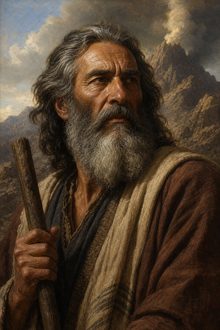
He is named Moses. The deliverer is brought up in the household of the king whose policy he survived.
Where in scripture
[8] Now there arose a new king over Egypt, who didn’t know Joseph. [9] He said to his people, “Behold, the people of the children of Israel are more and mightier than we. [10] Come, let us deal wisely with them, lest they multiply, and it happen that when any war breaks out, they also join themselves to our enemies, and fight against us, and escape out of the land.” [11] Therefore they set taskmasters over them to afflict them with their burdens. They built storage cities for Pharaoh: Pithom and Raamses. [12] But the more they afflicted them, the more they multiplied and the more they spread out. They were grieved because of the children of Israel. [13] The Egyptians ruthlessly made the children of Israel serve, …
Exodus 1:8–22 — opening verses
[1] A man of the house of Levi went and took a daughter of Levi as his wife. [2] The woman conceived, and bore a son. When she saw that he was a fine child, she hid him three months. [3] When she could no longer hide him, she took a papyrus basket for him, and coated it with tar and with pitch. She put the child in it, and laid it in the reeds by the river’s bank. [4] His sister stood far off, to see what would be done to him. [5] Pharaoh’s daughter came down to bathe at the river. Her maidens walked along by the riverside. She saw the basket among the reeds, and sent her servant to get it. [6] She opened it, and saw the child, and behold, the baby cried. She had compassion on him, and said, “This is one of the Hebrews’ children.” …
Exodus 2:1–10 — opening verses
[23] By faith, Moses, when he was born, was hidden for three months by his parents, because they saw that he was a beautiful child, and they were not afraid of the king’s commandment. [24] By faith, Moses, when he had grown up, refused to be called the son of Pharaoh’s daughter, [25] choosing rather to share ill treatment with God’s people, than to enjoy the pleasures of sin for a time; [26] accounting the reproach of Christ greater riches than the treasures of Egypt; for he looked to the reward. [27] By faith, he left Egypt, not fearing the wrath of the king; for he endured, as seeing him who is invisible.
Hebrews 11:23–27
Scripture quotations are from the World English Bible, a public-domain translation.