David, Bathsheba and Nathan
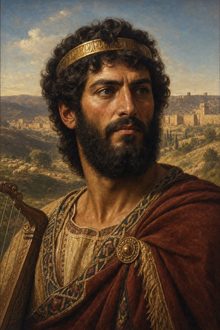
The account opens with a pointed line: in the spring, when kings go out to battle, David stayed in Jerusalem. From the palace roof he sees Bathsheba bathing, sends for her, and she conceives.
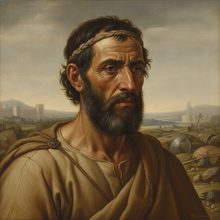
The cover-up is worse than the act. Her husband Uriah is recalled from the front and pressed to go home, and twice refuses on principle while the army is in the field. So David sends him back carrying his own death warrant — orders to Joab to put him where the fighting is fiercest and withdraw.
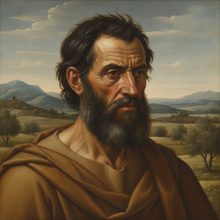
Nathan the prophet exposes it with a parable about a rich man who takes a poor man's one ewe lamb. David's anger at the story convicts him: you are the man. The child dies, the sword is promised to his house, and Psalm 51 is traditionally read as his response.
Where in scripture
[1] At the return of the year, at the time when kings go out, David sent Joab, and his servants with him, and all Israel; and they destroyed the children of Ammon, and besieged Rabbah. But David stayed at Jerusalem. [2] At evening, David arose from his bed and walked on the roof of the king’s house. From the roof, he saw a woman bathing, and the woman was very beautiful to look at. [3] David sent and inquired after the woman. One said, “Isn’t this Bathsheba, the daughter of Eliam, Uriah the Hittite’s wife?” [4] David sent messengers, and took her; and she came in to him, and he lay with her (for she was purified from her uncleanness); and she returned to her house. [5] The woman conceived; and she sent and told David, and said, “I am with child.” …
2 Samuel 11:1–27 — opening verses
[1] Yahweh sent Nathan to David. He came to him, and said to him, “There were two men in one city; the one rich, and the other poor. [2] The rich man had very many flocks and herds, [3] but the poor man had nothing, except one little ewe lamb, which he had bought and raised. It grew up together with him, and with his children. It ate of his own food, drank of his own cup, and lay in his bosom, and was like a daughter to him. [4] A traveler came to the rich man, and he spared to take of his own flock and of his own herd, to prepare for the wayfaring man who had come to him, but took the poor man’s lamb, and prepared it for the man who had come to him.” [5] David’s anger burned hot against the man, and he said to Nathan, “As Yahweh lives, the man who has done this deserves to die! …
2 Samuel 12:1–25 — opening verses
[1] Have mercy on me, God, according to your loving kindness. According to the multitude of your tender mercies, blot out my transgressions. [2] Wash me thoroughly from my iniquity. Cleanse me from my sin. [3] For I know my transgressions. My sin is constantly before me. [4] Against you, and you only, I have sinned, and done that which is evil in your sight; that you may be proved right when you speak, and justified when you judge. [5] Behold, I was born in iniquity. In sin my mother conceived me. [6] Behold, you desire truth in the inward parts. You teach me wisdom in the inmost place. [7] Purify me with hyssop, and I will be clean. Wash me, and I will be whiter than snow. [8] Let me hear joy and gladness, That the bones which you have broken may rejoice. …
Psalms 51:1–19 — opening verses
Scripture quotations are from the World English Bible, a public-domain translation.